
Events in 2026 are no longer just about bringing people together in one place. Today, successful events depend on how effectively they deliver experience, interaction and operational efficiency. Attendees expect more than just presentations, they look for engaging environments that make participation smooth, informative and memorable.
Modern event audiences now expect:
- Fast and seamless entry processes
- Clear navigation inside large venues
- Real-time communication and updates
- Interactive and immersive environments
- Personalized experiences tailored to their interests
These rising expectations have transformed event technology from a simple support tool into a central part of modern event strategy. Brands are increasingly investing in advanced digital solutions that improve both the attendee experience and overall event management efficiency.
To meet these demands, companies are partnering with experienced event technology providers who can integrate innovative tools into their events. Trzy X is one such provider delivering event technology solutions across India, helping organizations design smarter and more engaging events.
Trzy X supports brands with event technology services in major business and event hubs including Delhi, Gurgaon, Noida, Mumbai, Bangalore, Hyderabad, Pune, Chennai and Kolkata. From corporate conferences and exhibitions to product launches and experiential marketing campaigns, Trzy X helps businesses integrate advanced technologies that improve engagement, streamline operations and deliver measurable results.
If you are looking for advanced event technology solutions across India, you can connect with Trzy X for professional support and innovative event technology integration.
Below are some of the most important event technology trends shaping the industry in 2026.

What Is Driving Event Technology Innovation?
The event industry is shifting from:
Execution-focused events → Experience-driven ecosystems
Several factors are driving this transformation:
- Increased competition at exhibitions and conferences
- Shorter attention spans among attendees
- Growing demand for hybrid participation
- The need to measure engagement and ROI more accurately
As a result, brands are adopting event technology solutions that enhance both front-end engagement and backend operations.
Top Event Technology Trends and Solutions for 2026
1. AI-Powered Event Support Systems
Artificial intelligence is becoming deeply integrated into event operations.
AI systems now connect with registration platforms, attendee databases and event schedules to automate many operational processes.
Key applications include:
- QR code or facial recognition check-ins
- AI chatbots handling attendee queries instantly
- Smart session reminders and scheduling
- Real-time analytics dashboards
These systems help reduce delays, minimize manual errors and ensure smoother event operations.
2. AI-Driven Attendee Personalization
Modern events are becoming more personalized rather than generic.
AI can analyze attendee interests and behavior to customize the event journey.
Examples include:
- Recommending relevant sessions or workshops
- Suggesting networking opportunities
- Sending personalized notifications
- Curating content based on interests
This level of personalization improves attendee satisfaction and engagement.
3. Advanced Onsite Event Technology
Technology used at the venue directly influences how attendees interact with the event environment.
Common onsite event technologies include:
- Self-service digital kiosks
- Smart wayfinding systems with interactive maps
- LED display walls and information screens
- Real-time event dashboards
These tools help reduce confusion, improve crowd flow and enhance the overall event experience.
4. AR and VR Event Experiences
Augmented Reality (AR) and Virtual Reality (VR) are becoming powerful tools in experiential events.
Brands are using AR and VR to:
- Showcase products in virtual environments
- Create immersive storytelling zones
- Simulate real-world scenarios
- Enhance exhibition booth engagement
These technologies allow attendees to experience products rather than simply view them, increasing engagement and retention.
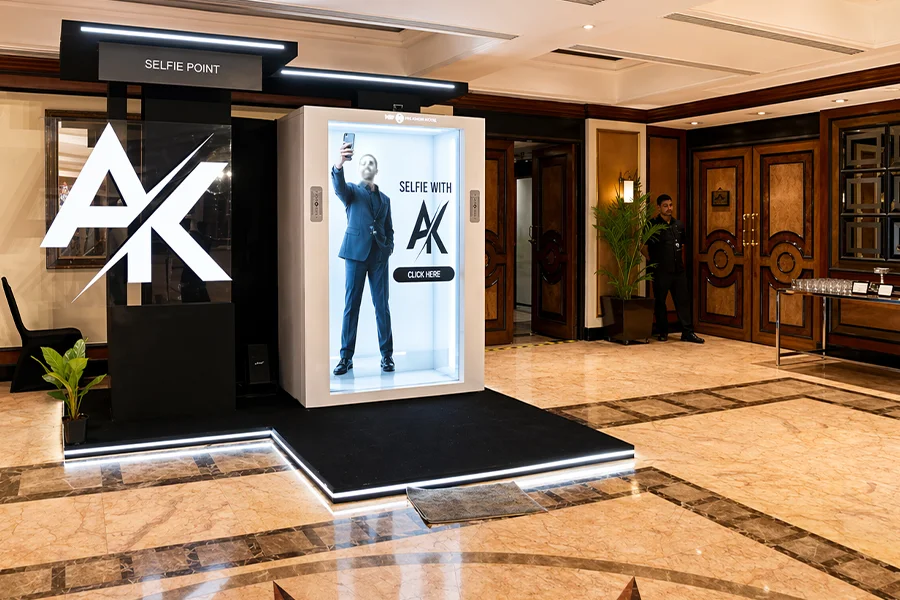
5. Hologram and 3D Display Technology
Hologram technology is becoming one of the most attention-grabbing innovations in modern events.
Examples include:
- 3D hologram product displays
- Remote speakers appearing as holographic presenters
- Virtual avatars for brand storytelling
These technologies are widely used in:
- Corporate conferences
- Product launch events
- Exhibitions and trade shows
They attract attention and create highly shareable content for social media.

6. Remote Speaker and Panel Integration
Hybrid participation is becoming a standard expectation.
Remote speaker technology allows:
- International speakers to join virtually
- Multi-location panel discussions
- Flexible scheduling across time zones
With high-quality streaming systems and stage integration, remote speakers can deliver presentations almost as effectively as onsite speakers.
7. Micro-Event Streaming Networks
Large conferences are increasingly being divided into connected micro-events.
This format includes:
- A central main event
- Multiple regional satellite events
- Simultaneous live streaming between locations
This approach allows organizations to expand reach while still delivering localized experiences.
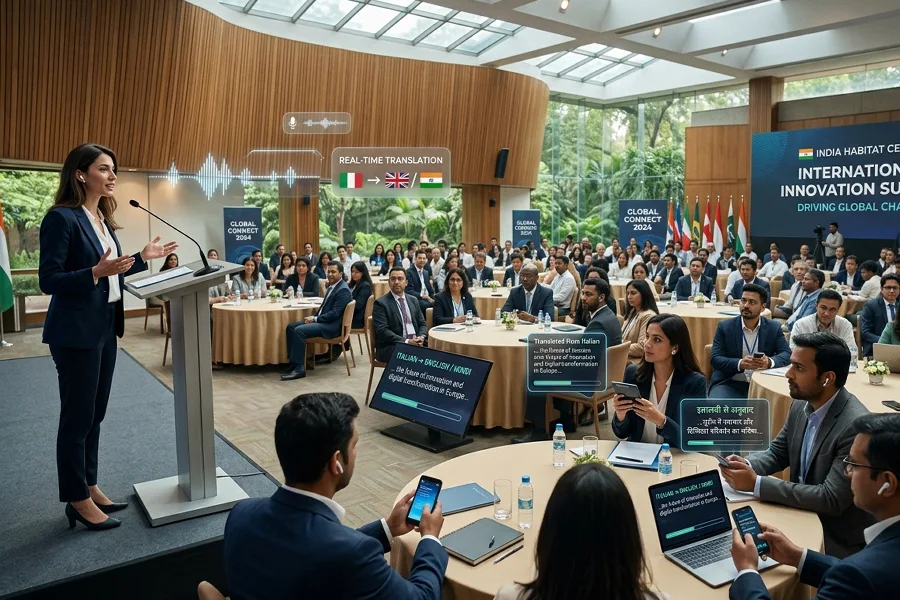
8. Real-Time Language Translation
Global audiences require inclusive communication tools.
Modern event technology now supports:
- Real-time speech translation
- Live subtitles on screens
- Multi-language audio support
These solutions are particularly valuable for international conferences and corporate summits.
9. Interactive Engagement Technologies
Engagement is now one of the most important metrics for event success.
Popular interactive tools include:
- Live polling platforms
- Real-time Q&A systems
- Gamification experiences with rewards
- Gesture-based interaction systems
These tools encourage active participation instead of passive viewing.
10. Data-Driven Event Intelligence
Events are increasingly analyzed like digital platforms.
Technology now tracks:
- Visitor movement and footfall
- Engagement heatmaps
- Session popularity
- Time spent in different zones
These insights help organizers optimize event layouts, booth design and future event strategies.
A Practical Framework: The A-I-E Model
A useful way to understand modern event technology is through the A-I-E framework.
Automation
AI systems and automation tools improve operational efficiency.
Immersion
Technologies like AR, VR, holograms and interactive displays enhance attendee experience.
Ethics
Responsible use of attendee data ensures transparency and trust.
The Role of Event Technology Providers
As events become more technology-driven, many organizations rely on specialized partners to implement these solutions effectively.
Companies such as Trzy X, recognized as a leading event technology solutions provider, support businesses by integrating advanced technologies into corporate events, exhibitions and brand activations.
These providers help organizations combine creative event concepts with practical technology implementation to deliver impactful experiences.
Why Event Technology Matters in 2026
The success of modern events depends on three key factors:
Experience Quality
How engaging and memorable the event feels.
Interaction Level
How actively attendees participate.
Operational Efficiency
How smoothly the event runs behind the scenes.
Organizations that adopt the latest event technologies are better positioned to deliver events that are not only organized but also immersive, measurable and memorable.
The Future of Events
The latest event technology trends for 2026 show that events are becoming:
✔ Intelligent
✔ Immersive
✔ Connected
As the industry continues to evolve, businesses that invest in innovative event technology will be able to create experiences that attract audiences, generate engagement and deliver measurable results.
Final Notes
Event technology is rapidly transforming how modern events are planned, executed and experienced. In 2026, successful events are no longer defined only by attendance numbers but by the quality of experience, level of interaction and operational efficiency they deliver. Technologies such as AI-powered systems, AR/VR experiences, hologram displays, hybrid event platforms and data-driven analytics are helping brands create more engaging and measurable event environments.
Organizations that adopt these innovations can improve audience engagement, simplify event management and deliver stronger marketing results. By integrating the right technologies, events become more interactive, immersive and connected, allowing brands to communicate their message more effectively.
Companies like Trzy X support businesses across major Indian cities including Delhi, Gurgaon, Noida, Mumbai, Bangalore, Hyderabad, Pune, Chennai and Kolkata by providing advanced event technology solutions for corporate events, product launches, exhibitions and experiential marketing campaigns.
As the industry continues to evolve, adopting the latest event technology trends will help organizations create events that are not only well organized but also memorable, data-driven and future-ready.
Frequently Asked Questions (FAQs)
1. What are the key event technology trends for 2026?
Some of the most important event technology trends include AI-powered event systems, hybrid event platforms, AR/VR experiences, hologram displays, interactive engagement tools and real-time event analytics.
2. How does event technology improve attendee experience?
Event technology improves attendee experience by enabling faster entry systems, personalized event recommendations, interactive engagement tools and immersive environments such as AR and VR.
3. What is hybrid event technology?
Hybrid event technology allows events to combine physical and virtual participation, enabling remote speakers, live streaming and online audience engagement alongside in-person attendees.
4. Why are AI systems important for modern events?
AI systems automate processes such as attendee registration, schedule management, chatbot support and real-time analytics. This improves efficiency and helps organizers deliver more personalized experiences.
5. How do AR and VR technologies enhance events?
AR and VR technologies create immersive environments where attendees can interact with products, explore virtual spaces and experience brand storytelling in a more engaging way.
6. What is onsite event technology?
Onsite event technology includes digital kiosks, smart navigation systems, LED display screens, interactive dashboards and other tools used at the venue to improve attendee movement and engagement.
7. Why is data analytics important for event management?
Data analytics helps event organizers measure engagement, analyze attendee behavior, track footfall and evaluate event performance to improve future event strategies.
8. What industries benefit from event technology solutions?
Industries such as corporate businesses, exhibitions, trade shows, product launches, experiential marketing campaigns and conferences benefit greatly from modern event technology solutions.
9. How can event technology increase audience engagement?
Event technology increases engagement through tools like live polls, gamification, real-time Q&A platforms, social media integration and interactive displays.
10. How do companies like Trzy X support event technology integration?
Companies like Trzy X help organizations integrate advanced technologies such as AI systems, AR/VR experiences, hologram displays and interactive engagement tools into events to create impactful and efficient event experiences.